The Enduring Tradition of Vermont's Town Meetings
Vermont Town Meeting Day

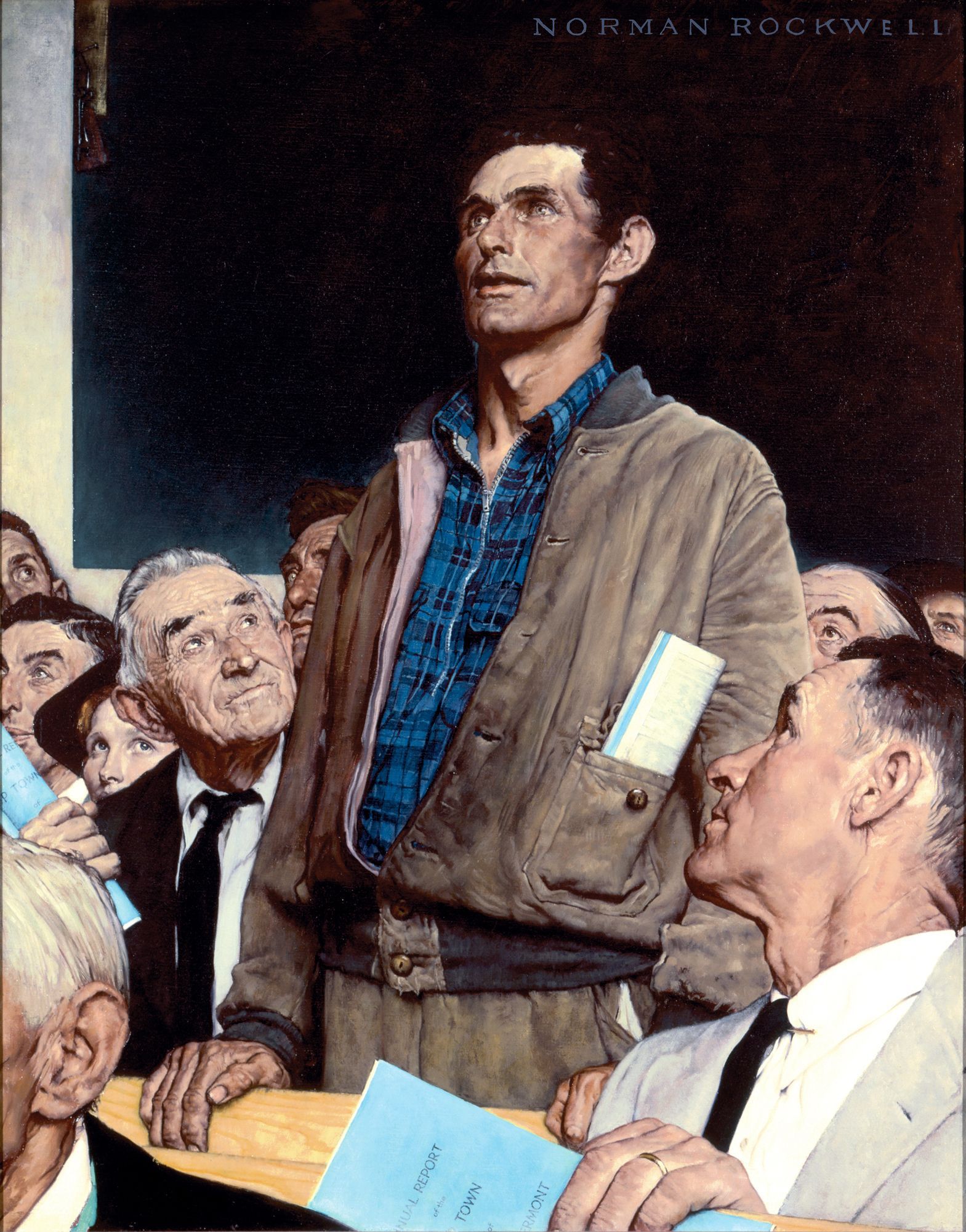
In the heart of New England, Vermont holds a tradition that vividly captures the essence of direct democracy—the Vermont Town Meeting. This annual event, deeply rooted in the state's history, serves not just as a local government meeting but as a vibrant testament to the community spirit and democratic participation that define Vermont. Norman Rockwell's iconic painting of a Vermont town meeting, "Freedom of Speech," immortalizes this democratic process, showcasing a lone individual standing among his neighbors, voicing his opinion with confidence and respect.


When is the Vermont Town Meeting This Year?


The Vermont Town Meeting is traditionally held on the first Tuesday of March. This year, the meetings are scheduled to take place on March 3rd with some towns meeting the night before.  Be sure to check with your town for the time and location,   Town meetings mark a continuation of a practice that has been upheld since the state's early days. These meetings offer a unique opportunity for residents to gather, discuss, and decide on local issues ranging from budget allocations to municipal policies, embodying the principle of governance by the people.


The History of Vermont Town Meetings


Vermont's town meeting tradition dates back to before its statehood, originating in the 18th century. It was a time when communities were smaller, and the town meeting served as the most practical form of government. This system allowed for community members to participate directly in the decision-making process, a stark contrast to the representative democracy seen in most other states and at the federal level.


Over the years, Vermont town meetings have evolved, but their core principles remain unchanged. They stand as a forum where citizens can directly influence their local government, deciding on everything from public spending to local laws. This form of direct democracy reinforces the accountability of elected officials and fosters a strong sense of community among participants.


Vermont Town Meetings Today


Despite the passage of time and the advent of modern technologies that have transformed how we communicate and govern, the majority of Vermont's towns continue to hold their annual meetings. In these gatherings, residents debate issues face-to-face, vote by a show of hands or by paper ballot, and take part in a tradition that has been described as the "purest form of democracy."


The importance of these meetings extends beyond local governance. They serve as a critical tool for education in civic responsibility, offering residents, especially the youth, a firsthand experience of democracy in action. The process encourages transparency, participation, and a deep sense of belonging to the community.


The Work of UVM Professor Frank Bryan:


The significance of Vermont's town meetings has been extensively studied by former University of Vermont Professor Frank Bryan, who dedicated much of his career to understanding and documenting this unique form of democracy. Bryan's work highlights how town meetings represent a fundamental aspect of Vermont's identity and serve as a model of civic engagement and direct democracy. His research underscores the effectiveness of town meetings in fostering discussion, facilitating local decision-making, and maintaining a vibrant community life.


Vermont Town Meetings are more than just annual gatherings; they are a living embodiment of direct democracy and a cornerstone of the state's cultural heritage. As we approach this year's meetings, we are reminded of the enduring value of community, the importance of civic participation, and the power of collective decision-making. In the spirit of Norman Rockwell's portrayal and inspired by the research of Professor Frank Bryan, Vermont continues to champion a tradition that ensures every voice is heard and every vote counts. For those of us committed to upholding the principles of democracy, Vermont's town meetings offer a beacon of hope and a model to aspire to.


Married Couples Should  Own Vermont Home as Tenants by the Entirety
July 16, 2026
Why Every Married Vermont Homeowner Should Understand Tenancy by the Entirety
July 8, 2026
Buying or Selling a Home in Vermont? Here's What Happens After the Contract Is Signed
Delaware Statutory Trust DST
July 1, 2026
A Delaware Statutory Trust Can Help You Defer Capital Gains Taxes While Transitioning From Active Property Management to Passive Real Estate Ownership
A surveyed vacant land parcel in Vermont with a property survey, marked building site, gravel drivew
June 15, 2026
Buying vacant land in Vermont? Learn about zoning, septic permits, Current Use, Act 250, wetlands, flood zones, financing, and other essential due diligence tips before you buy.
Common Vermont Title Issues and How They Are Resolved
June 10, 2026
Learn how Vermont attorneys resolve title defects, clear liens, address deed issues, and help buyers and sellers reach a successful closing.
Making a Home Purchase Offer in Vermont: Key Terms, Contingencies, and Legal Considerations
June 4, 2026
Making a Home Purchase Offer in Vermont: Key Terms, Contingencies, and Legal Considerations
Top 20 Vermont Title Search Issues
By Fred Peet May 20, 2026
Common Title Search Surprises We Have Found After Thousands of Vermont Title Searches
Vermont first time home buyer signing legal documents
May 12, 2026
Essential Legal Services Every First-Time Home Buyer in Vermont Should Understand
Careers at Peet Law Group: Join Vermont’s Leading Real Estate Law Firm
By Fred Peet May 7, 2026
Why Work at Peet Law Group? Career Opportunities at a Leading Vermont Real Estate Law Firm
Vermont Title Insurance
April 15, 2026
Buying or selling real estate in Vermont involves more than agreeing on a price. One of the most important but often misunderstood protections is title insurance. Many buyers ask whether it is truly necessary. The short answer is that while Vermont law does not require title insurance, it is often a smart and valuable safeguard. What Is Title Insurance? Title insurance is a policy that protects property owners and lenders against financial loss due to defects in the title. A title defect is any issue that could affect ownership rights, such as unknown liens, unpaid taxes, errors in public records, undisclosed heirs, boundary disputes, or forged documents. Unlike other types of insurance, title insurance protects against past problems, not future events. Is Title Insurance Required in Vermont? No, Vermont law does not require buyers to purchase title insurance. However, most lenders will require a lender’s title insurance policy if you are financing the purchase. An owner’s policy is optional, but strongly recommended. If you are paying cash, no one will require title insurance, but that does not eliminate the underlying risks. What Does a Title Search Do? Before issuing a policy, a real estate attorney performs a title search by reviewing land records to confirm that the seller has clear ownership. While this process is thorough, it is not foolproof. Some issues cannot be discovered through a title search alone, including hidden defects in the chain of title, clerical recording mistakes, fraud, forgery, or missing heirs. Title insurance provides protection against these risks even after the closing. Owner’s Policy vs Lender’s Policy Understanding the difference is important. A lender’s title insurance policy is required by most mortgage lenders and protects only the lender’s financial interest in the property. It does not protect the buyer. An owner’s title insurance policy is optional but protects your equity and ownership rights for as long as you own the property. Without an owner’s policy, you could be responsible for legal fees or financial losses if a title issue arises. Why Title Insurance Matters in Vermont Vermont’s real estate landscape makes title insurance especially important. Many properties have long ownership histories that go back generations. Boundary lines may be based on old surveys or informal agreements. Rights of way and shared access roads are common, and some easements may be unrecorded or poorly documented. These factors increase the likelihood of title issues that may not be immediately obvious at the time of purchase. What Does Title Insurance Cost? Title insurance is typically a one-time premium paid at closing. The cost varies based on the purchase price but is relatively small compared to the protection it provides. There are no ongoing premiums. What Happens If You Do Not Have Title Insurance? If a title issue arises after closing and you do not have an owner’s policy, you may face legal costs to defend your ownership, loss of part of your property rights, or financial loss if another party has a valid claim. In some cases, ownership itself could be at risk. When Might You Consider Skipping It? Some buyers consider skipping title insurance when purchasing property from a close family member or when the property has a very recent and well-documented title history. Even in these situations, risks can still exist, and legal advice is important before deciding to go without coverage. The Bottom Line While title insurance is not required in Vermont, it is one of the most effective ways to protect your investment in real estate. For most buyers, especially those unfamiliar with the property’s history, an owner’s policy provides peace of mind and financial protection that far outweighs the cost. How Peet Law Group Can Help Peet Law Group guides buyers and sellers through every stage of the Vermont real estate process. This includes conducting thorough title searches, identifying and resolving title issues, advising on title insurance coverage, and handling closings efficiently and accurately. With offices in Williston and White River Junction, the firm focuses exclusively on Vermont real estate law and provides practical, experienced guidance tailored to each transaction. Frequently Asked Questions Do I need title insurance if I am paying cash? No, but it is still strongly recommended to protect your ownership rights. Does title insurance cover boundary disputes? It may cover certain disputes depending on the policy and circumstances. Is title insurance a one-time cost? Yes, it is paid once at closing and lasts as long as you own the property. Can title issues really happen after a closing? Yes. Some problems, such as fraud or undiscovered heirs, may only surface later. If you are buying or selling property in Vermont and have questions about title insurance, working with an experienced real estate attorney can help you avoid costly mistakes and protect your investment.